Real Estate Software Development in Dubai: Features, Cost & Benefits
Posted by Teqnovos Mobile App Development Company
Filed in Technology 18 views
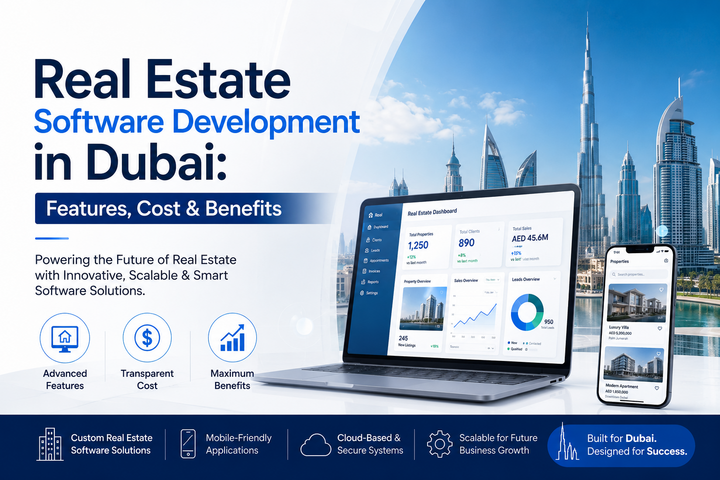
Dubai has established itself as one of the world's most dynamic real estate markets, attracting investors, developers, brokers, and property management companies from across the globe. With smart city initiatives, rapid urban development, and increasing demand for digital services, the industry is moving beyond traditional property management methods toward intelligent software solutions.
Whether it's managing residential communities, commercial properties, luxury developments, or rental portfolios, businesses now require digital platforms that simplify operations, improve customer experiences, and provide real-time insights. This shift has made real estate software development in Dubai a strategic investment rather than just a technological upgrade.
Custom real estate software enables businesses to automate repetitive tasks, centralize data, manage customer relationships, streamline property transactions, and make informed decisions through analytics. Unlike generic software, tailored solutions are designed around specific business workflows, making them more scalable and efficient as organizations grow.
In this guide, you'll learn what real estate software development is, why it matters in Dubai's competitive market, the essential features every platform should include, the development process, cost considerations, and the long-term benefits of investing in a custom solution.
What Is Real Estate Software Development?
Real estate software development is the process of designing, building, and maintaining digital platforms that help property businesses manage their daily operations efficiently. These software solutions are customized to meet the unique needs of real estate agencies, property developers, brokerage firms, and property management companies.
Instead of relying on spreadsheets or multiple disconnected applications, businesses can manage everything from a single platform, including property listings, tenant information, lease agreements, customer inquiries, financial reporting, maintenance requests, and performance analytics.
Depending on business objectives, custom software may include:
- Property Management Systems (PMS)
- Real Estate CRM Software
- Property Listing Platforms
- Brokerage Management Systems
- Tenant and Lease Management Solutions
- Facility Management Software
- Commercial Real Estate Management Platforms
- Mobile Applications for Agents and Customers
Unlike off-the-shelf software, custom real estate software development allows organizations to add only the features they need, integrate with existing systems, and scale as their operations expand.
Why Dubai's Real Estate Industry Is Investing in Custom Software
Dubai's property sector continues to evolve through innovation, government-backed digital initiatives, and growing customer expectations. Buyers and tenants now expect seamless digital experiences, while businesses need efficient systems to manage increasing operational complexity.
Here are some of the key reasons why companies are investing in real estate software development in Dubai.
- Increasing Property Transactions: Dubai's expanding residential, commercial, and mixed-use developments generate a large volume of property transactions. Managing listings, documentation, client communication, and contracts manually can slow operations and increase the likelihood of errors. Custom software automates these processes, enabling businesses to handle larger transaction volumes with greater efficiency.
- Growing Customer Expectations: Today's property buyers and tenants expect digital convenience. They want to search listings online, schedule property visits, submit inquiries, upload documents, and complete payments without unnecessary delays. Real estate software provides these capabilities through user-friendly web portals and mobile applications, improving the overall customer experience.
- Operational Efficiency: Managing multiple properties involves coordinating maintenance, lease renewals, financial records, and tenant communications. Centralized software reduces manual work, improves collaboration across teams, and helps businesses operate more efficiently.
- Better Business Insights: Modern software includes dashboards and reporting tools that provide real-time visibility into occupancy rates, rental income, sales performance, maintenance costs, and customer engagement. These insights support smarter decision-making and long-term business planning.
- Scalability for Future Growth: As businesses expand into new markets or manage larger property portfolios, custom software can be enhanced with additional modules, integrations, and automation features without disrupting existing operations.
Essential Features of Real Estate Software
The effectiveness of any real estate platform depends on the features it offers. A well-designed solution should simplify daily operations while delivering a seamless experience for both internal teams and customers.
- Property Listing Management: A centralized listing management system allows businesses to add, update, categorize, and manage residential, commercial, and rental properties from one dashboard. Advanced filtering options make it easier for customers to find properties based on location, price, amenities, property type, and availability.
- Customer Relationship Management (CRM): An integrated CRM helps manage leads, customer interactions, follow-ups, and sales pipelines. By organizing client information in one place, businesses can improve communication, nurture prospects, and increase conversion rates.
- Tenant and Lease Management: Property managers can store lease agreements, monitor contract expiration dates, manage tenant records, automate rent reminders, and track occupancy status through a single interface. This reduces administrative effort while improving tenant satisfaction.
- Online Rent Collection and Payment Integration: Secure payment gateway integration enables tenants to pay rent, deposits, maintenance charges, and other fees online. Automated invoicing and payment tracking reduce manual accounting work and improve financial transparency.
- Maintenance Request Management: Tenants can submit maintenance requests digitally, while property managers can assign tasks, monitor progress, and communicate updates in real time. This streamlines maintenance operations and enhances service quality.
- Document Management: Real estate transactions involve contracts, lease agreements, inspection reports, legal documents, and financial records. A centralized document management system ensures secure storage, quick retrieval, and controlled access to sensitive information.
- Analytics and Reporting: Interactive dashboards provide valuable insights into occupancy rates, rental income, sales performance, maintenance costs, customer acquisition, and overall business performance. These reports help decision-makers identify opportunities and optimize operations.
- Mobile Accessibility: With mobile applications, property agents can manage listings, respond to inquiries, schedule appointments, and update property information while working remotely. Customers also benefit from the convenience of browsing properties and communicating directly through their smartphones.
- AI-Powered Recommendations: Artificial intelligence is becoming an important component of modern real estate software solutions. AI can analyze customer preferences, browsing behavior, and historical data to recommend relevant properties, automate lead scoring, and provide personalized experiences that improve customer engagement.
Benefits of Custom Real Estate Software
Investing in real estate software development in Dubai offers more than just digital convenience. It provides long-term value by improving operational efficiency, enhancing customer experiences, and supporting business growth. As the UAE real estate sector continues to evolve, businesses with tailored software solutions are better positioned to adapt to market demands and stay ahead of the competition.
- Improved Operational Efficiency: Managing properties, clients, contracts, maintenance requests, and financial records manually can consume valuable time and increase the risk of errors. Custom software automates routine processes, allowing teams to focus on higher-value tasks such as customer service and business development.
- Better Customer Experience: Modern property buyers and tenants expect quick responses, seamless communication, and digital self-service options. Features such as online property searches, virtual tours, appointment scheduling, secure document sharing, and online payments create a more convenient and engaging customer journey.
- Centralized Data Management: A custom platform stores property details, customer records, lease agreements, invoices, maintenance history, and reports in one secure location. This improves collaboration between departments and ensures that everyone has access to accurate, up-to-date information.
- Enhanced Security and Compliance: Real estate businesses handle sensitive financial and personal information. Custom software can be designed with advanced security features such as encrypted data storage, role-based access controls, multi-factor authentication, and regular backups to protect business and customer data.
- Scalability for Business Growth: As your portfolio expands, your software should grow with it. Custom real estate software allows businesses to add new features, integrate third-party services, support multiple locations, and manage larger property portfolios without replacing the entire system.
- Data-Driven Decision Making: Real-time dashboards and reporting tools provide insights into occupancy rates, sales performance, rental income, maintenance costs, and customer behavior. These analytics help business leaders make informed decisions, identify trends, and improve overall performance.
Technologies Used in Real Estate Software Development
The success of a real estate software solution depends on selecting the right technologies. Modern platforms combine intelligent automation, secure cloud infrastructure, and seamless integrations to deliver reliable performance and an excellent user experience.
- Artificial Intelligence (AI): AI is transforming the real estate industry by automating repetitive tasks and improving decision-making. It can recommend suitable properties based on user preferences, score leads according to buying intent, power intelligent chatbots for customer support, and analyze market trends to help businesses make strategic decisions.
- Cloud Computing: Cloud-based software provides secure access from anywhere, making it ideal for businesses with multiple offices or remote teams. It also simplifies software updates, data backups, and system scalability without requiring significant hardware investments.
- Machine Learning: Machine learning algorithms analyze historical data to identify patterns, forecast property demand, estimate pricing trends, and personalize property recommendations, helping businesses make smarter decisions over time.
- GIS and Map Integration: Interactive maps enable users to explore properties by location, nearby schools, hospitals, transportation links, and other amenities. This feature improves the property search experience and helps buyers make informed decisions.
- Payment Gateway Integration: Secure payment gateways simplify rent collection, booking fees, deposits, and other transactions while providing customers with a convenient and reliable payment experience.
- API Integration: Modern real estate platforms often connect with CRM systems, ERP software, accounting tools, document management solutions, marketing platforms, and communication services. API integrations eliminate duplicate work and improve operational efficiency.
Real Estate Software Development Process
Developing a successful real estate software solution requires a structured approach that aligns technology with business goals.
1. Discovery and Business Analysis: The project begins with understanding business objectives, target users, operational workflows, and technical requirements. This stage helps define the project scope and prioritize essential features.
2. UI/UX Design: Designers create intuitive user interfaces and seamless user experiences that make it easy for agents, property managers, and customers to navigate the platform across web and mobile devices.
3. Software Development: Developers build the platform using modern technologies and agile development practices. Core modules such as property management, CRM, payment integration, analytics, and user management are implemented during this stage.
4. Testing and Quality Assurance: Before launch, the software undergoes comprehensive testing to identify and resolve issues related to functionality, performance, security, compatibility, and usability. This ensures a reliable experience for end users.
5. Deployment: Once testing is complete, the software is deployed to the production environment. Businesses may choose cloud hosting or on-premises deployment depending on their operational and security requirements.
6. Ongoing Maintenance and Support: Software development does not end at launch. Regular updates, performance monitoring, security improvements, bug fixes, and feature enhancements help keep the platform secure, efficient, and aligned with evolving business needs.
Real Estate Software Development Cost in Dubai
The cost of real estate software development in Dubai varies depending on several factors, including project scope, feature complexity, integrations, design requirements, development timeline, and the experience of the development team. Rather than focusing solely on the initial investment, businesses should evaluate the long-term value, scalability, and return on investment that custom software can deliver.
Factors That Influence Development Cost
- Number and complexity of features
- Web, mobile, or cross-platform development
- UI/UX design requirements
- Third-party integrations (CRM, ERP, payment gateways, maps)
- AI-powered capabilities
- Security and compliance requirements
- Cloud infrastructure and hosting
- Ongoing maintenance and support
Development Complexity Comparison
| Project Type | Typical Scope | Estimated Timeline |
|---|---|---|
| Basic Solution | Property listings, CRM, user management, reporting | 3–5 months |
| Mid-Level Platform | Tenant management, payment integration, maintenance module, analytics | 5–8 months |
| Enterprise Solution | AI features, ERP integration, advanced analytics, mobile apps, multi-location support | 8–12+ months |
While enterprise solutions require a larger investment, they often deliver greater long-term value by improving efficiency, reducing manual work, and supporting future business expansion.
Common Challenges in Real Estate Software Development and How to Overcome Them
Frequently Asked Questions
1. What is real estate software development?
Real estate software development is the process of creating custom digital solutions that help property businesses manage listings, customer relationships, leases, payments, maintenance, reporting, and other operational activities through a centralized platform.
2. Why should real estate businesses choose custom software?
Custom software is designed around your unique business processes, making it more scalable, secure, and flexible than off-the-shelf solutions. It also supports seamless integration with existing systems and future business growth.
3. What features should real estate software include?
A modern platform typically includes property listing management, CRM, tenant and lease management, payment gateway integration, maintenance tracking, analytics dashboards, document management, mobile accessibility, and AI-powered automation.
4. How much does real estate software development cost in Dubai?
The cost depends on factors such as project complexity, required features, integrations, platform type, development timeline, and ongoing maintenance. Enterprise-grade solutions generally require a higher investment than basic property management systems.
5. How long does it take to develop real estate software?
Development timelines vary based on project scope. Basic platforms may take a few months, while enterprise solutions with advanced integrations and AI capabilities can require several months or more.
6. Can AI improve real estate software?
Yes. AI enhances real estate software by providing intelligent property recommendations, automating lead management, improving customer support through chatbots, analyzing market trends, and generating actionable business insights.
7. Is cloud-based real estate software a good choice?
Cloud-based solutions offer greater flexibility, remote accessibility, automatic updates, enhanced scalability, and reduced infrastructure costs, making them a preferred choice for many modern real estate businesses.
8. How do I choose the best real estate software development company in Dubai?
Look for a company with proven industry experience, a strong technical team, expertise in custom software development, transparent communication, robust security practices, and reliable post-launch support.